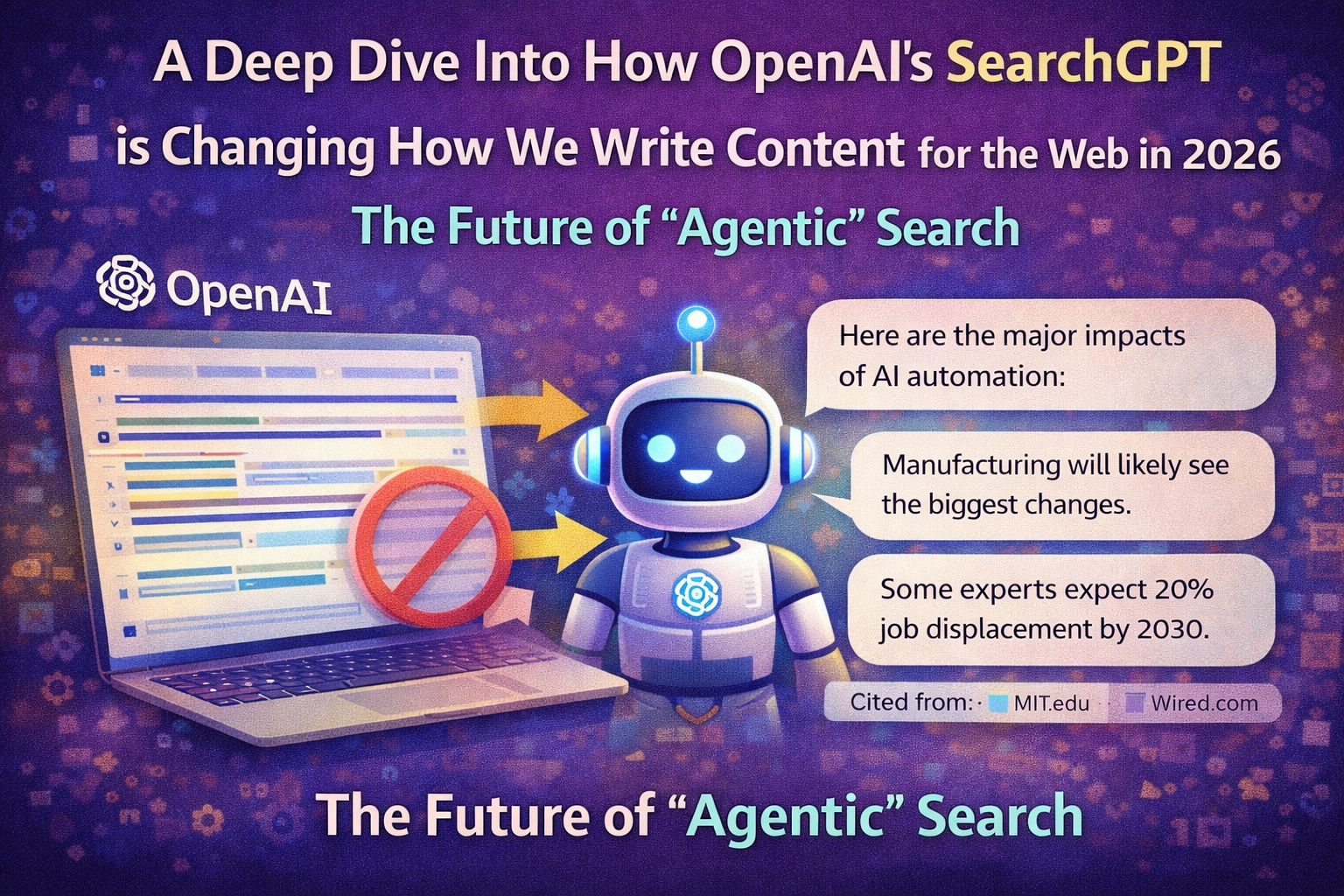
A few weeks ago I tried something simple.
Instead of opening a search engine and typing a query, I asked SearchGPT a complicated research question:
“What are the biggest changes happening in SEO because of AI search engines?”
I expected the usual experience. A page full of links. Ten articles. A bit of scrolling. Several tabs open.
That didn’t happen.
Instead, the system returned a structured explanation that combined insights from multiple sources. It summarized arguments. Compared viewpoints. Linked to references.
It felt less like search—and more like a research assistant.
That moment made something clear to me.
The way people find information online is changing fast. And if you write content for the web, you’re going to feel that shift.
Welcome to the early days of The Future of “Agentic” Search.
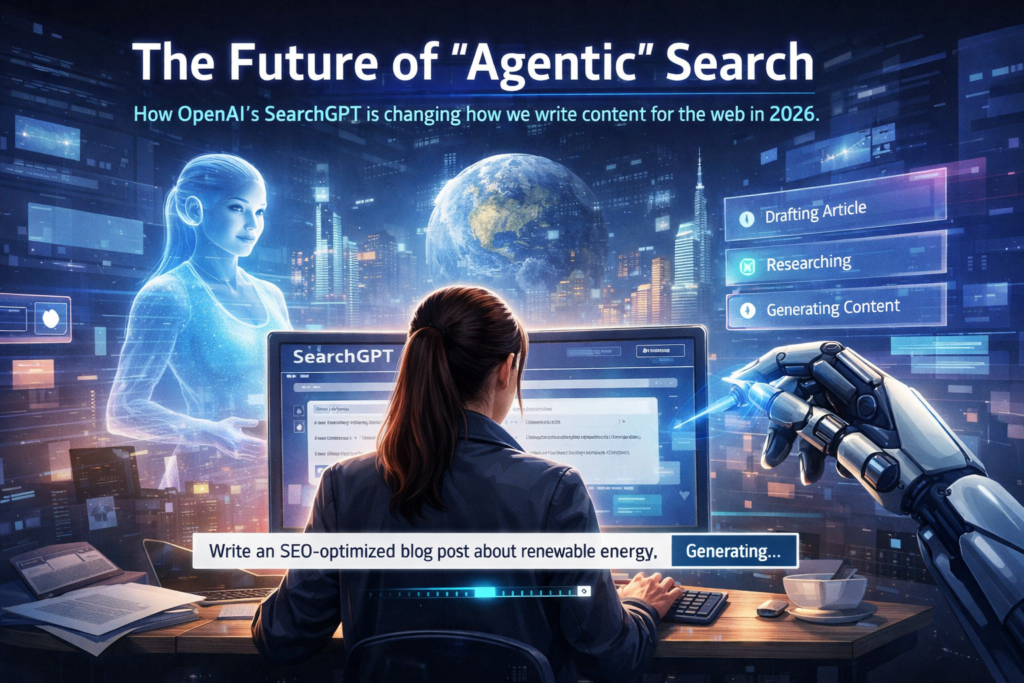
The Day Search Started Feeling Different
For more than two decades, the internet has worked on a simple model.
You type a question.
Search engines return links.
You choose which page to read.
It’s a process we all know.
But tools like SearchGPT change the flow.
Instead of returning a list of pages, the system reads multiple sources and synthesizes an answer.
The difference might sound subtle, but it has major implications for content creators.
Think about how traditional search works.
You might:
- open several articles
- scan paragraphs for useful information
- piece together the answer yourself
Agentic search systems skip that process. They do the research for you.
And that changes the role of web content.
What “Agentic Search” Actually Means
The phrase agentic search is starting to appear more frequently in discussions about AI-powered search systems.
The idea is simple.
Instead of acting as a directory of links, the search engine behaves like an agent.
An agent can:
- gather information
- compare sources
- summarize insights
- answer follow-up questions
Traditional search engines focus on discovering pages.
Agentic search systems focus on producing answers.
This shift is subtle but powerful.
Users no longer need to visit ten websites to understand a topic. The system reads those websites and produces a synthesized explanation.
For content creators, that means the competition isn’t just ranking on page one anymore.
The real challenge is becoming a source worth citing.
How SearchGPT Works
SearchGPT is an experimental search system from OpenAI.
Instead of presenting only search results, it performs several tasks behind the scenes.
Core Capabilities
SearchGPT can:
- collect information across the web
- compare multiple sources
- summarize key ideas
- cite references
- answer follow-up questions
In practice, it behaves less like a search engine and more like a research assistant that reads the internet on your behalf.
That means the content it chooses to reference matters more than ever.
SearchGPT vs Traditional Search
| Feature | Traditional Search Engines | AI Chat Search | SearchGPT |
|---|---|---|---|
| Result format | List of links | Conversational responses | Synthesized answers |
| Research ability | User must compare sources | Partial | Strong |
| Source comparison | Manual | Limited | Automated |
| Follow-up questions | No | Yes | Yes |
| Best use case | Finding websites | Quick explanations | Complex research |
For everyday users, the experience becomes faster and more conversational.
For publishers, the rules of visibility start to shift.
Why SearchGPT Changes How Content Is Written
One of the first things I noticed while testing SearchGPT was how it selected sources.
The system consistently favored content that contained:
- clear explanations
- structured sections
- authoritative insights
- factual depth
Thin content didn’t appear frequently in the responses.
That’s important.
For years, some websites relied on heavy keyword optimization to rank in traditional search results.
Agentic search systems care far less about keyword density.
Instead, they look for content that provides real informational value.
Writers now have a different objective.
Instead of simply ranking for keywords, the goal is to produce material that AI systems recognize as credible, useful sources.
How I Tested SearchGPT for Real Research
During one test, I tried researching a complex topic: the economic impact of AI automation.
Using traditional search, the process looked like this:
- open multiple articles
- compare statistics
- evaluate conflicting opinions
- combine insights manually
With SearchGPT, the experience changed.
I asked several layered questions:
- “What industries will be most affected by AI automation?”
- “What arguments exist against rapid AI adoption?”
- “Which reports discuss workforce displacement?”
The system pulled information from several sources and created a structured answer.
It also cited the articles it referenced.
For quick research, the workflow felt dramatically faster.
The New SEO Reality: Writing for AI Agents
This shift has significant implications for content strategy.
Traditional SEO focused on:
- keyword placement
- backlink acquisition
- technical optimization
Those elements still matter.
But agentic search introduces new priorities.
Content now needs to provide:
- clear explanations
- well-structured sections
- original insights
- evidence-based claims
Why?
Because AI systems analyze content differently than humans browsing search results.
They extract information.
If your article provides clear answers and useful explanations, it becomes more likely to appear in synthesized responses.
Content Formats That Perform Well in Agentic Search
Some types of content are particularly useful for AI systems.
Based on my testing, these formats appear frequently in SearchGPT responses.
Examples include:
- expert guides
- structured tutorials
- research summaries
- case studies
These formats work well because they present information in organized sections.
AI systems can easily extract insights from them.
For writers, that means structure is becoming more important than ever.
Common Mistakes Writers Will Make
As search technology evolves, some mistakes are almost guaranteed.
I’ve already started seeing a few.
Common pitfalls include:
- publishing generic AI-generated articles
- focusing only on keywords
- ignoring credibility signals
- writing shallow summaries without expertise
These approaches worked in parts of the early SEO era.
They won’t work as well when AI systems analyze content quality directly.
Pro Tip
Write for extraction, not just reading.
Agentic search systems often extract specific passages from web pages.
To improve your chances of being cited:
- use clear headings
- explain ideas concisely
- structure information logically
This makes your content easier for AI systems to interpret.
Who Needs to Adapt to Agentic Search
The shift toward AI-driven search affects more than just tech companies.
Anyone publishing content online should pay attention.
This includes:
- bloggers
- media publishers
- SaaS companies
- SEO agencies
- technical writers
If traffic depends on search visibility, the rise of agentic systems will influence strategy.
What the Future of Search Might Look Like
Search is evolving from a directory of websites into something closer to an interactive research experience.
Instead of browsing dozens of pages, users may increasingly rely on AI systems that synthesize knowledge from across the web.
That doesn’t mean websites disappear.
It means the role of web content changes.
The best content becomes the source material that AI systems reference when answering questions.
For creators willing to adapt, the opportunity is still enormous.
Because in the emerging world of The Future of “Agentic” Search, the most valuable content isn’t just content that ranks.
It’s content that AI agents trust enough to cite.
